The Prague Castle Imperial Stables 2007 exhibition
Striving for Artistic Freedom in the Late 1950s and Early 1960s
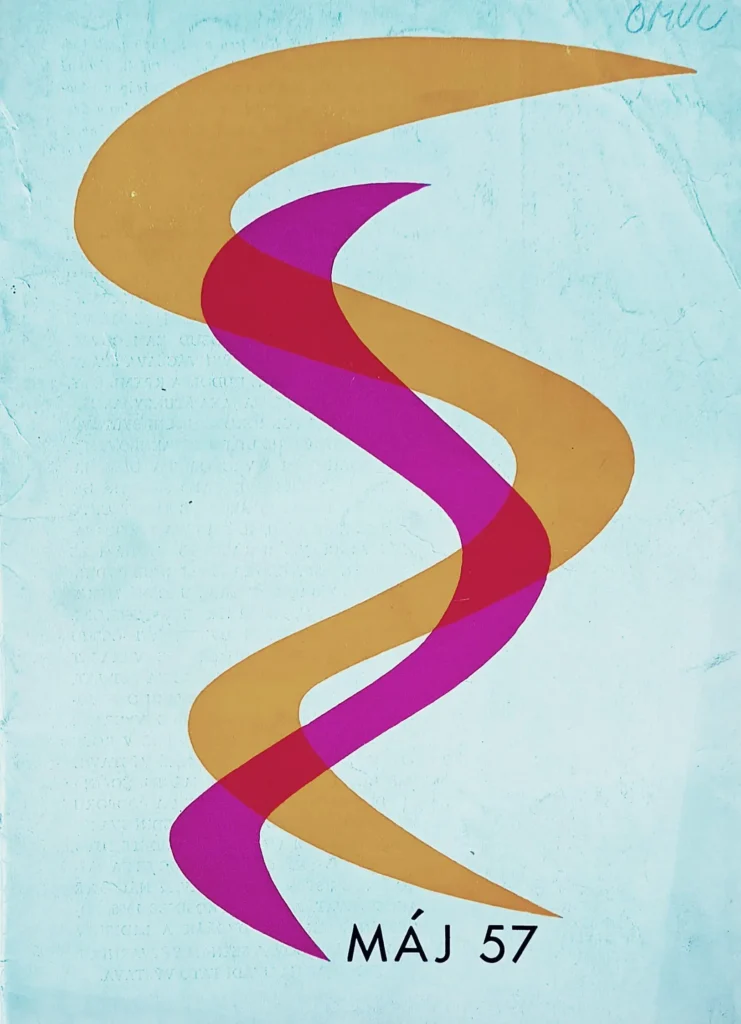
In the second half of the 1950s and first half of the 1960s, the Art group Maj 57 (May 57) brought together Czech visual artists who rejected official art as dictated by the totalitarian regime and who emphasized artistic freedom and the right to exhibit without political limitations. Maj 57 was the first of several art groups that formed during the changing political climats after 1956. Its first exhibit in the spring of 1957 featured a broad range of artists, brought public attention to this generation of artists and paved the way for the exhibition of contemporary modern art. The exhibit thus played a significant cultural and political role. After years of official surveys of socialist art in the 1950s, it was the first group presentation by artists of the so-called “young” generation who had previously existed outside the official realm. Despite disapproval and an officially critical stance, the group organised several additional exhibits, over the course of which it underwent changes in membership and its range of artistic expression. The group’s activities continued to be important until 1964, when the political and cultural liberalization opened possibilities for individual success.
Maj 57 differed from other groups primarily its broad scale of ideas and openness to various approaches. Its artists followed in the modernist traditions of Czech and world – in particular French – art before 1948, thus contributing to the continuity of modern art during the totalitarian era. While the first exhibit, which was of a salon-like character, included older works produced since the early 1950s but previously unknown to the public, a year later the focus of the exhibit was on contemporary individual artistic vision. Another milestone was the exhibit in 1964, which featured new names alongside core members and at which the group’s overall expression shifted towards abstraction.
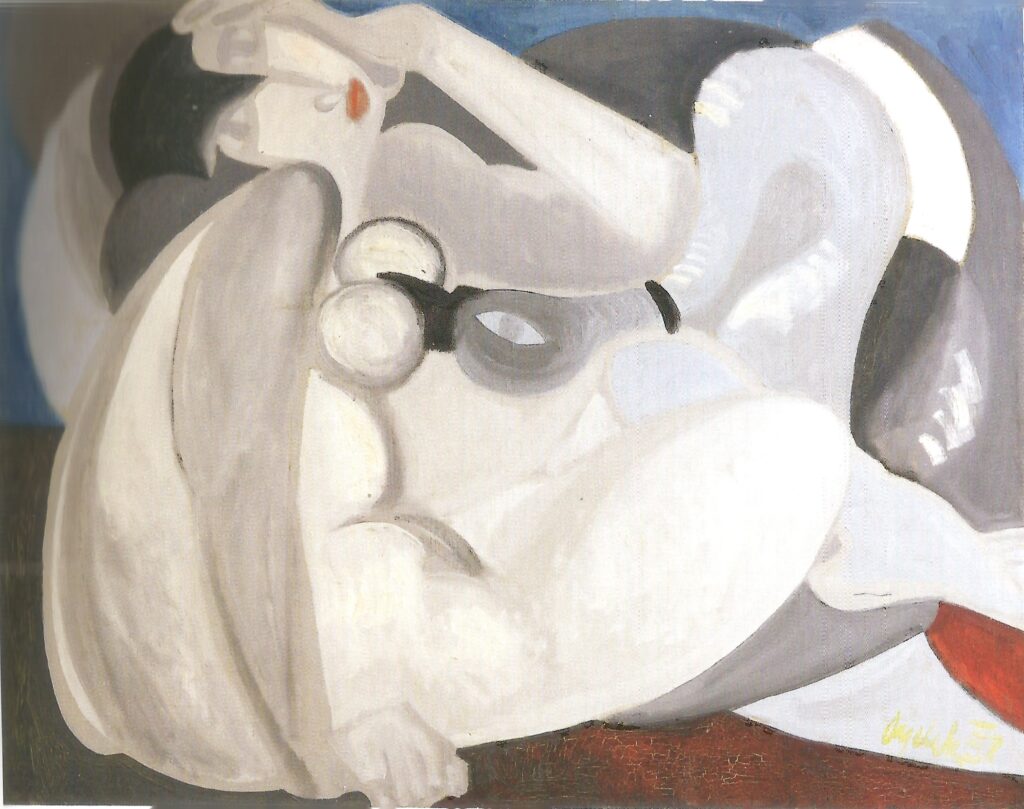
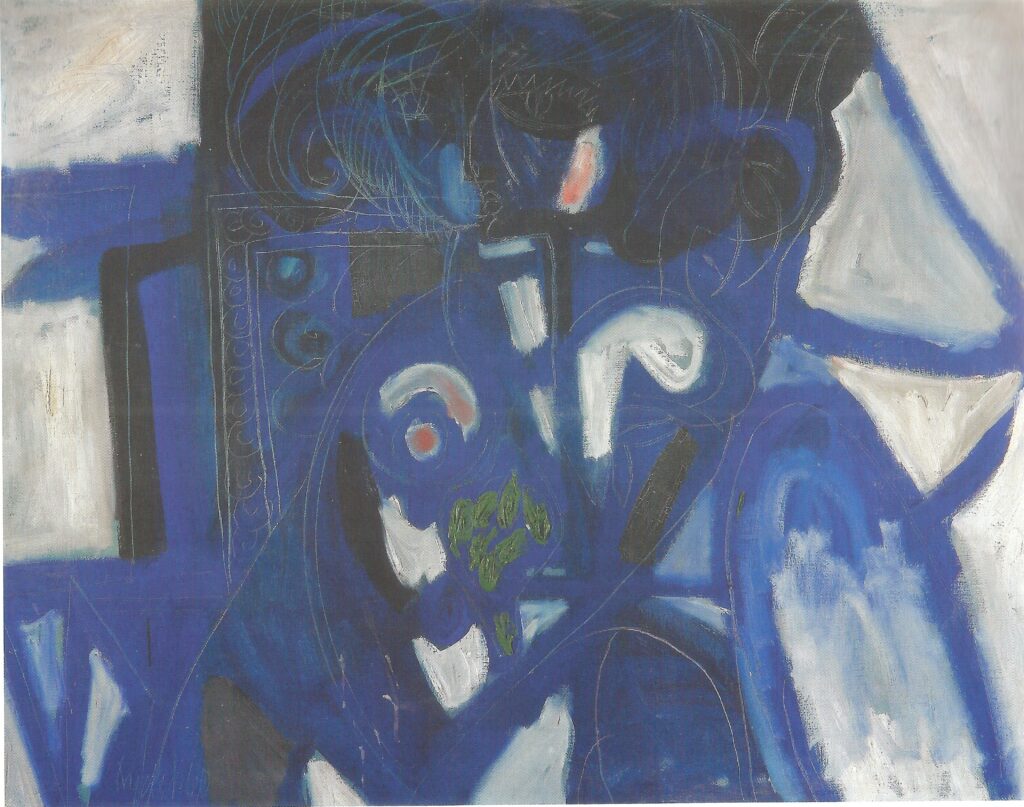
The exhibition in the Imperial Stables at Prague Castle shows roughly 70 paintings and sculptures by artists who formed the core of Maj 57. lt is no longer possible today to totally reconstruct the format of the group’s exhibits in 1957—1964, but we have been able to locate several important works ol art from these exhibits, and other exhibited works can at least attempt to reflect the type of works found at the original exhibits. The selection focuses in particular on the reIatively unknown period from the 1950s, which was the most important time for the group.
(…) The formation of the Máj 57 group was conditioned by the specific political situation in socialist Czechoslovakia at the time. After Stalin’s death, and especially after the 20th Congress of the Communist Party of the Soviet Union in 1956, there was a certain relaxation of the regime, and efforts to reform existing institutions were not long in coming. Within the ongoing restructuring of the Central Union of Czechoslovak Fine Artists (established in 1949), two new selective (i.e., no longer general) organizations were created: the Union of Czechoslovak Architects and the Union of Czechoslovak Fine Artists. During the founding of the latter, the idea of “free ideological groups of artists” was formulated. The subject of discussion among these groups was to be the search for the best form of socialist realism, and art was therefore still meant to be “socialist in content and national in form.” However, the possibility for artists to associate according to their ideological orientation was in itself a significant step forward, which ultimately also enabled the founding of the Máj 57 group.
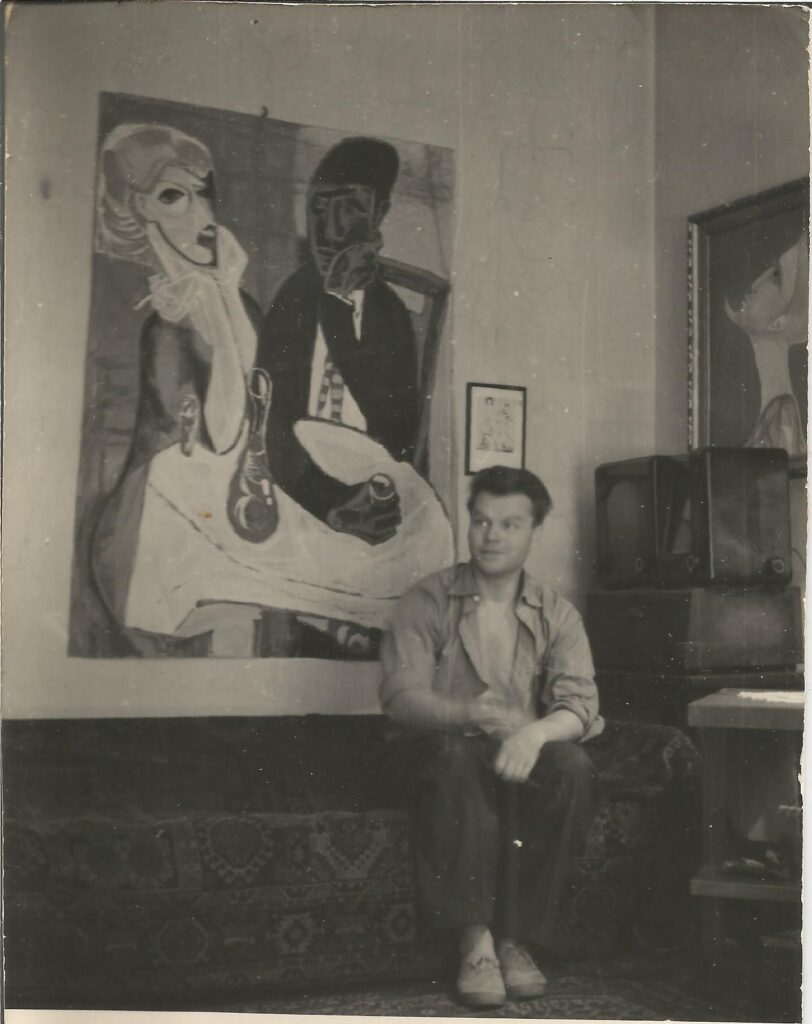
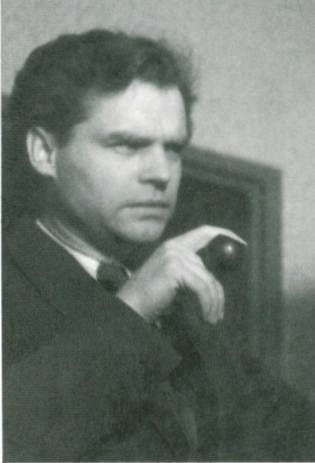
The establishment of the group was announced to the Union of Czechoslovak Fine Artists and the magazine Výtvarná práce by theorist František Dvořák and artist Ladislav Dydek at the end of 1956; the name Máj 57 was adopted by the collective of artists later. The core of the group consisted of Richard Fremund, Jitka Kolínská, Jiří Martin, and Robert Piesen, who were gradually joined by artists from other circles. At the first group exhibition titled “Mladé umění” (Young Art) held at the Municipal House in Prague in May 1957, the exhibitors, in addition to the aforementioned artists, also included Jiří Balcar, Andrej Bělocvětov, Vlastimil Beneš, Běla Čermáková, Libor Fára, Richard Fremund, Miloslav Hájek, Dagmar Hendrychová, František Chaun, Miloslav Chlupáč, Marie Martinová, Jiří Winter Neprakta, Vojtěch Nolč, Dora Nováková, Zdeněk Palcr, Stanislav Podhrázský, Jiří Rathouský, Zbyněk Sekal, Jaromír Skřivánek, Miroslav Vystrčil, and Karel Vysušil. Over the years, new artists appeared at group exhibitions (in 1964, artists such as Theodor Pištěk, Jan Svoboda, and Jan Švankmajer exhibited with the group), while some no longer participated in joint activities. (…) Adriana Primusovà