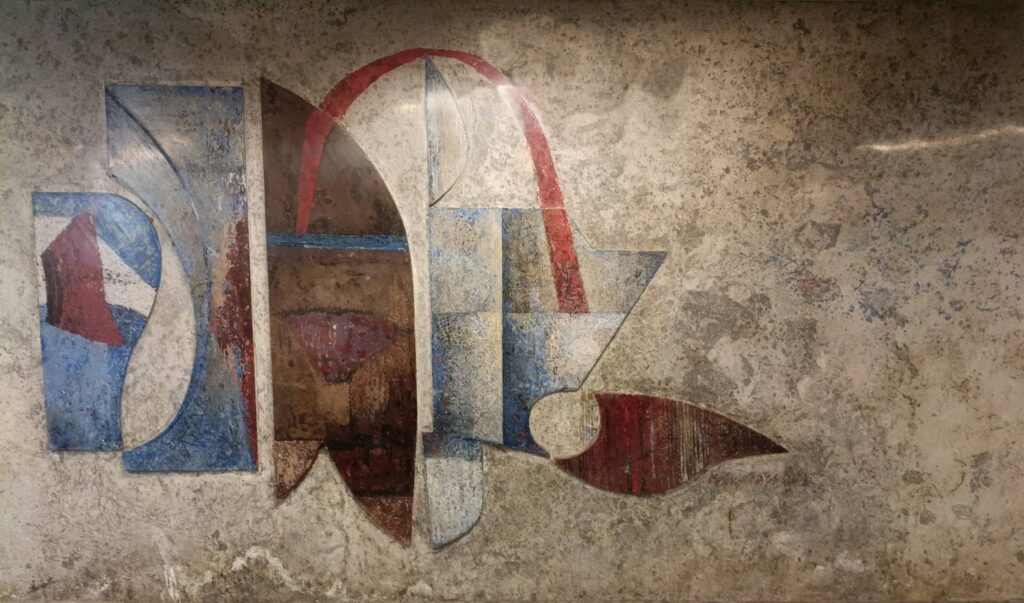
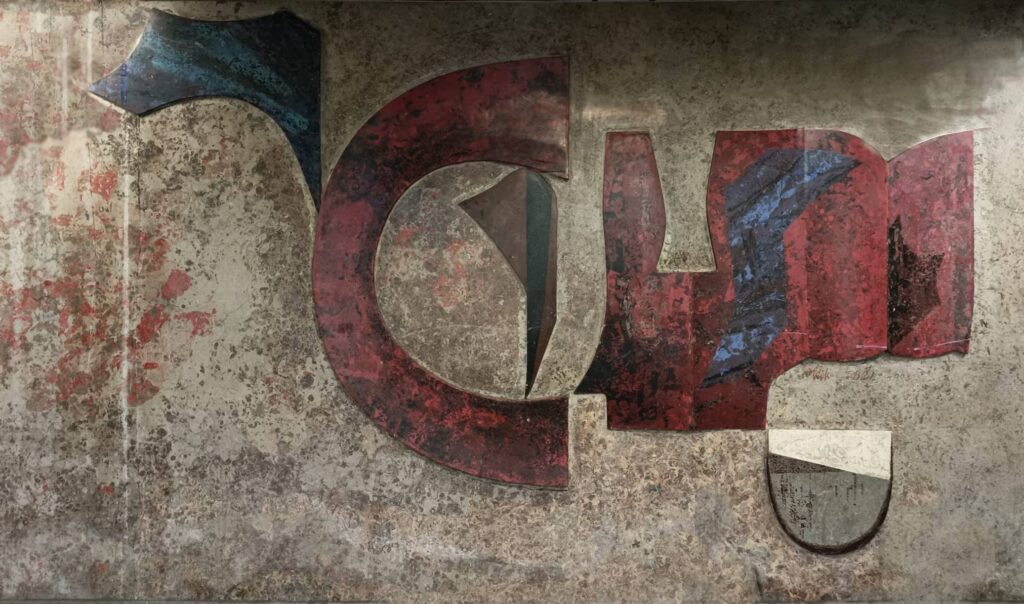
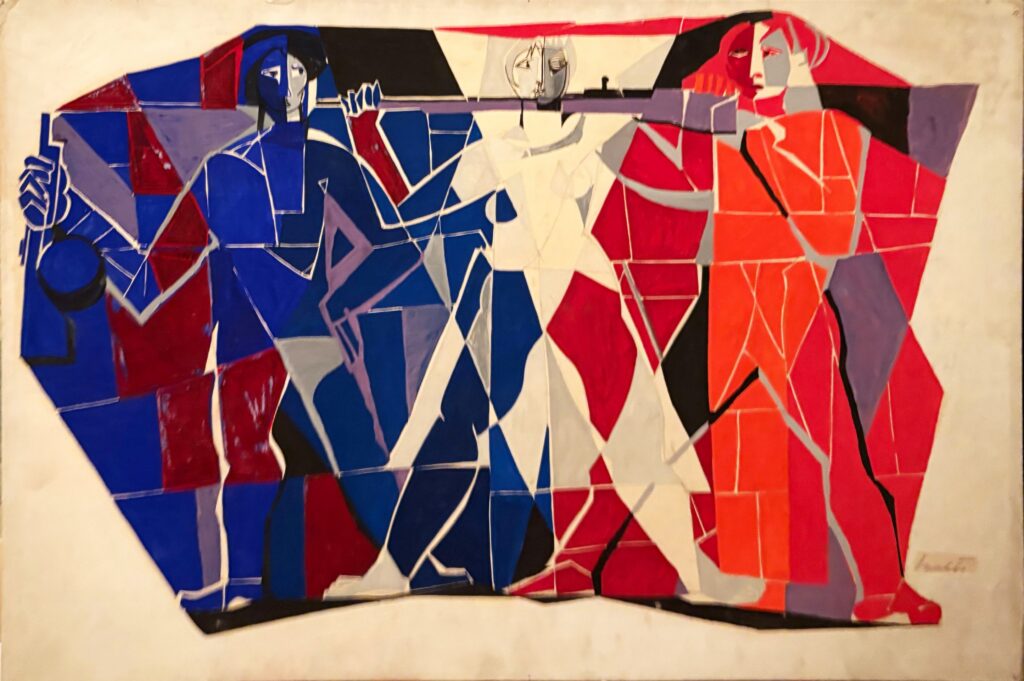
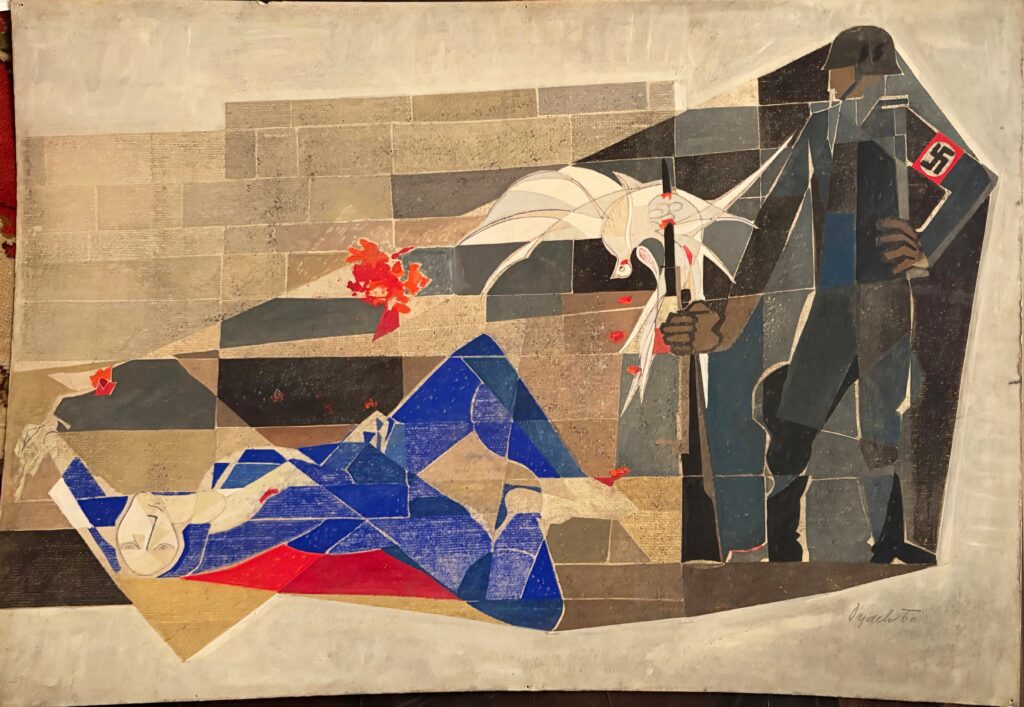
After 1963, Dydek dedicated himself more to monumental and architecturally decorative creations. In all of this, the expressive medium always plays an important role. This period includes large ceramic bas-reliefs (e.g., the Ostrava-Havirov cinema), stained glass windows (school in Prague-Kobylisy), and other experiments. Slowly, the so-called Prague Spring is approaching, and a certain liberalization is also visible in the field of art. Dydek’s work also has new possibilities for application. In the first pedestrian underpass in Prague, in the middle of Wenceslas Square, between Vodickova and Jindrisska streets (today’s entrance to the metro), Dydek created two large panels (approximately 3 x 5 meters), using a special colored stucco technique (“stucco lustro”), which surprisingly have survived to this day. (LM)